
Introduction: Facility Profile and Project Stakes
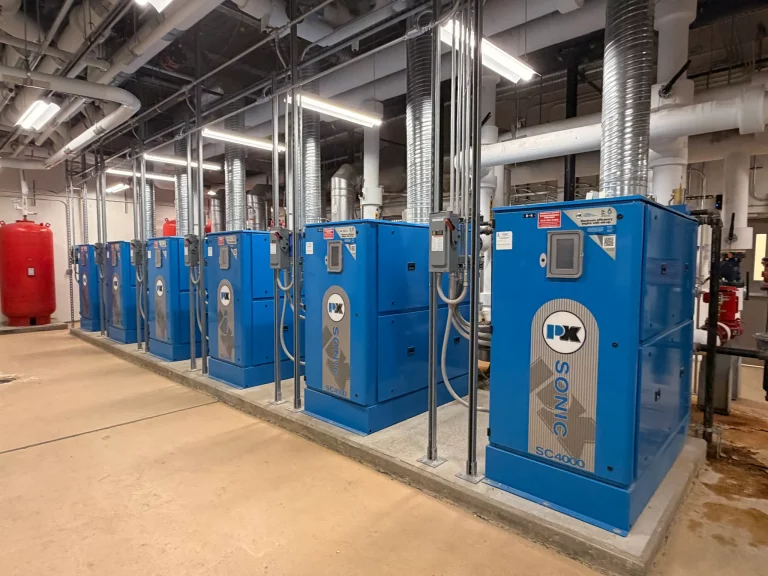
Senior Home Facility is a senior living environment in Albany, New York, where dependable comfort heat and domestic hot water are essential for resident safety, infection control, and daily operations. The facility needed stable system performance through seasonal load swings and high-demand DHW periods. Adirondack Combustion Technologies (ACT) was brought in to support a practical approach to heating and DHW reliability with an emphasis on safe combustion performance, consistent temperature control, and serviceable mechanical room operation.
Project Overview: Existing System Constraints and Risks
Senior living facilities operate with higher sensitivity to temperature deviations and hot water interruptions than many commercial buildings. When heating and DHW systems drift out of tune, minor issues can quickly become resident-impacting events.
Key constraints and risks included:
- Tight tolerance for DHW temperature instability and recovery delays.
- Increased operational risk when combustion and safety devices are not maintained to a stable baseline.
- Elevated service urgency during cold-weather peaks, when downtime affects both comfort and resident care routines.
Solution: Selected Equipment and System Design Rationale
ACT supported a reliability-first approach centered on maintaining stable heating and DHW delivery while reducing nuisance issues that often appear under variable demand. Patterson-Kelley was treated as a single manufacturer entity in the service context to keep equipment documentation, parts assumptions, and procedures consistent.
The system approach was selected to support:
- Stable DHW temperature control and predictable recovery under morning and peak-use demand.
- Reliable combustion operation with verified safety performance and clean starts.
- Serviceability and clear operational baselines for facility staff.
Consultative Execution: Engineering Approach and Coordination
ACT’s role extended beyond isolated service calls, with an emphasis on aligning system performance with the facility’s day-to-day operating needs and staffing realities.
Primary support included:
- Reviewing DHW demand patterns and comfort-heat expectations across resident areas.
- Coordinating access, scheduling, and verification steps to reduce disruption to resident routines.
- Performing tuning and inspection work with a focus on documenting setpoints, readings, and safety checks for repeatable operation.
The goal was to keep the plant operating in a controlled, well-understood state so the facility team could plan maintenance and respond to issues without guesswork.
Results & Operational Impact: Post‑Installation Performance
This project emphasized operational reliability and predictable performance rather than headline efficiency claims. With the systems maintained to a stable baseline, the facility reduced the likelihood of resident-impacting interruptions and improved day-to-day control of heating and DHW delivery.
Observed operational impacts included:
- More consistent DHW temperature behavior under changing demand.
- Fewer avoidable interruptions related to maintenance-driven combustion and control issues.
- Improved clarity for the facility team through documented inspection findings and repeatable setpoints.
Why This Matters for Similar Facilities and Applications
Across New York, senior living, assisted living, and healthcare-adjacent facilities rely on heating and DHW systems that must be both stable and serviceable. These environments benefit from a reliability-first approach that prioritizes verified safety operation, clear baselines, and maintenance routines aligned with real operating conditions.
Adirondack Combustion Technologies supports similar facilities by applying an engineering-informed service model that emphasizes safe combustion performance, dependable temperature control, and operational predictability. ACT can apply the same approach to other facilities where resident comfort and DHW continuity are non-negotiable.
Request a Free Specification Quote
Request a free specification quote for an engineered, no-obligation review for commercial, industrial, or institutional facilities in New York. ACT can review loads, code considerations, venting constraints, and mechanical room space to define a system reliability plan that fits your operating requirements.