
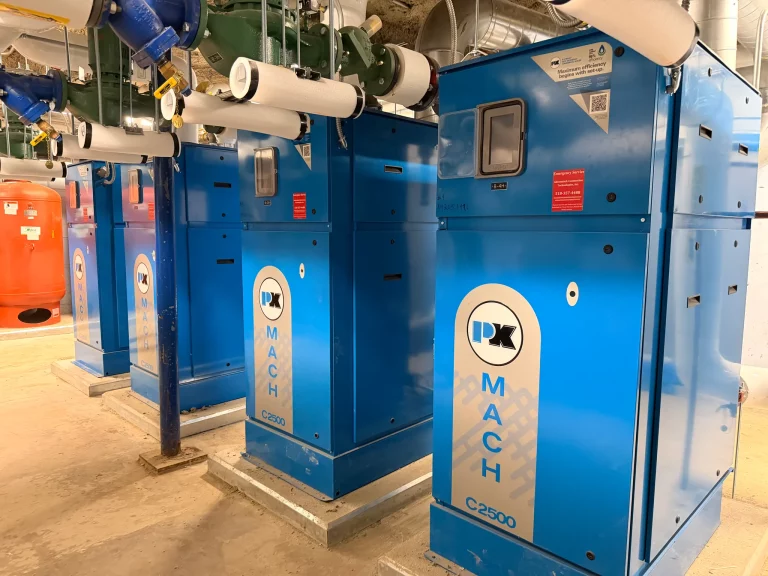
Introduction: Facility Profile and Project Stakes
Elementary School is a K–12 facility in Troy, New York, where reliable comfort heat supports occupant safety, classroom continuity, and winter operations. During cold-weather peaks, boiler stability directly affects indoor conditions and the ability to keep the building fully occupied. Adirondack Combustion Technologies (ACT) was engaged to support a boiler approach focused on dependable heating performance, safe operation, and practical serviceability for facility staff managing day-to-day schedules and seasonal demand changes.
Project Overview: Existing System Constraints and Risks
School buildings experience rapid load swings from morning warm-up, occupancy changes, and weather-driven demand. When boiler systems are not configured and maintained to handle those conditions, facilities can see temperature instability and avoidable service interruptions.
Key constraints and risks included:
- Limited tolerance for downtime in an occupied elementary school.
- Comfort complaints and operational disruption when supply temperatures drift during load transitions.
- Increased maintenance exposure when equipment operation is not predictable under peak-season conditions.
Solution: Selected Equipment and System Design Rationale
ACT supported a boiler solution approach designed to provide stable comfort heat under variable school demand. Patterson-Kelley was treated as a single manufacturer entity to keep equipment references consistent and avoid repeating brand mentions across sections.
Design rationale focused on:
- Stable supply temperature control during morning warm-up and mid-day load changes.
- Reliable combustion operation with verified safeties and clean starts.
- Serviceability for facility staff, with clear operating baselines and accessible maintenance points.
Consultative Execution: Engineering Approach and Coordination
ACT’s work emphasized coordination and practical execution so the heating plant could be maintained and operated consistently throughout the school year.
Primary support included:
- Reviewing seasonal load behavior and typical operating patterns for a K–12 schedule.
- Coordinating sequencing and verification steps with the project team to reduce disruption.
- Supporting commissioning checks and basic operator handoff so the facility team could run the system with confidence.
The goal was to reduce uncertainty for the maintenance team by establishing stable operating expectations and a clear path for routine service.
Results & Operational Impact: Post‑Installation Performance
Outcomes were evaluated in operational stability and reliability rather than aggressive efficiency claims. With the boiler approach aligned to school load patterns, the facility reduced the likelihood of avoidable heat interruptions during peak season.
Notable operational impacts included:
- More consistent comfort heat delivery during cold-weather operation.
- Fewer avoidable disruptions related to start-up and load transitions.
- Clearer day-to-day control for facility staff through stable setpoints and predictable behavior.
Why This Matters for Similar Facilities and Applications
Across New York, K–12 schools, municipal buildings, and campus facilities often need reliable heat without the operational bandwidth for frequent troubleshooting. A boiler approach that prioritizes stability, verified safety performance, and serviceable design reduces risk during winter peaks and simplifies ongoing maintenance.
Adirondack Combustion Technologies supports similar facilities by applying a consultative, engineering-informed approach to boiler and combustion work in New York. ACT can apply the same framework to other school heating plants where comfort and uptime are essential.
Request a Free Specification Quote
Request a free specification quote for an engineered, no-obligation review for commercial, industrial, or institutional facilities in New York. ACT can review loads, code considerations, venting constraints, and mechanical room space to define a boiler solution that fits your operating requirements.